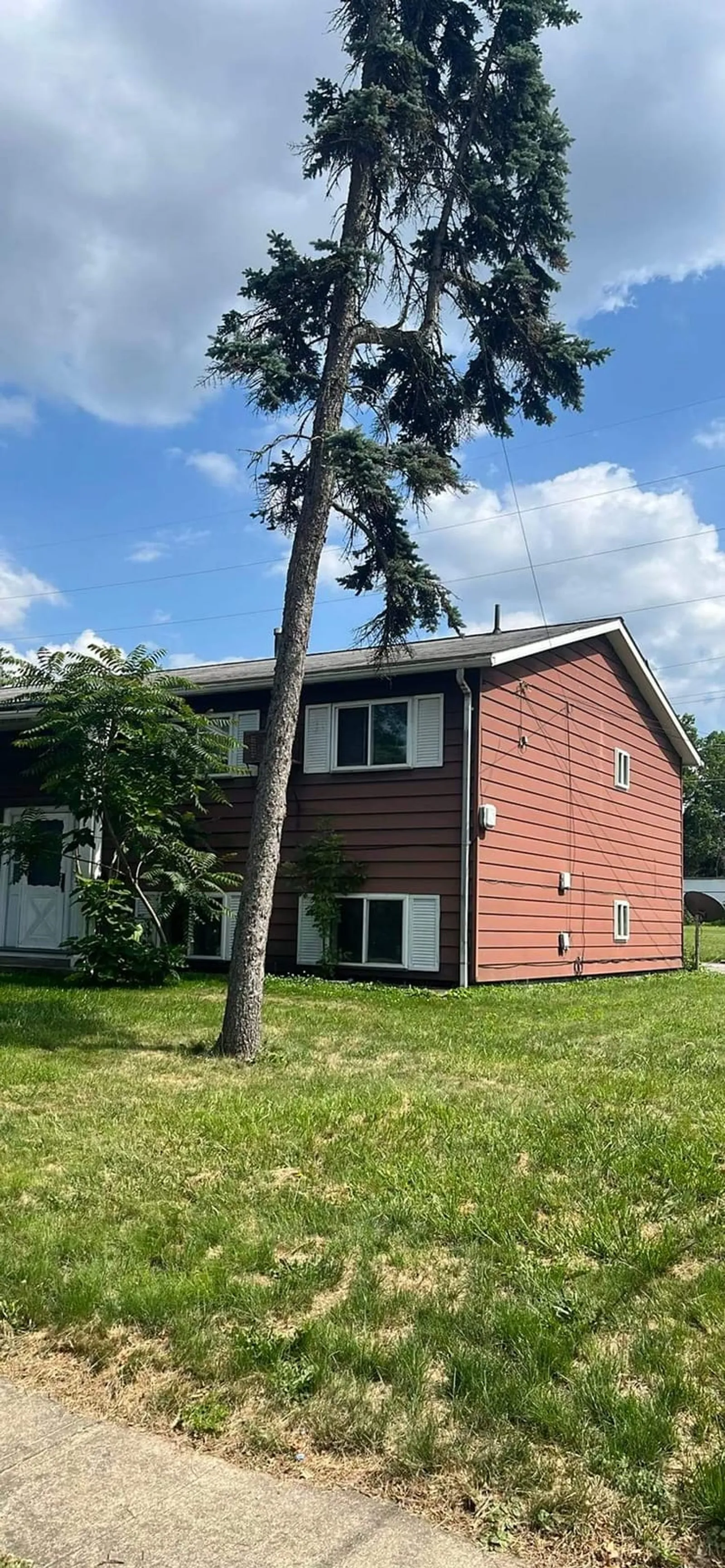
Wind Damage Insurers Love to Call "Wear and Tear"
High winds lift shingles, tear siding, topple trees and drive rain into the structure. We prove the damage is storm-related — not the "maintenance" excuse the carrier reaches for to deny your claim.
Wind & Storm Damage Claims in Ohio
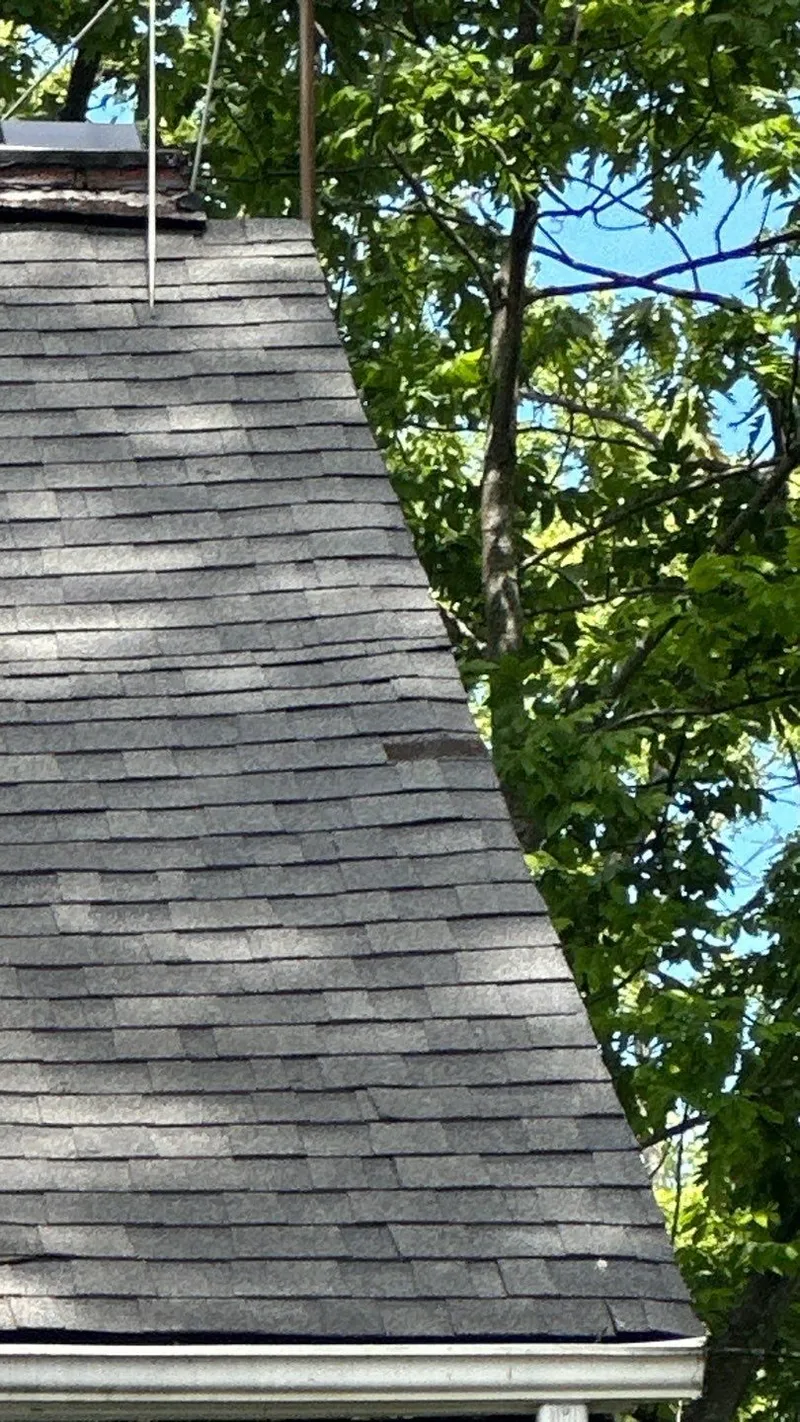
Wind damage is slow to reveal itself: lifted or creased shingles, loosened flashing and ridge caps, torn siding, and driven-rain intrusion that shows up as interior stains weeks later. Insurers lean on "wear and tear" and "maintenance" exclusions to deny or minimize these claims.
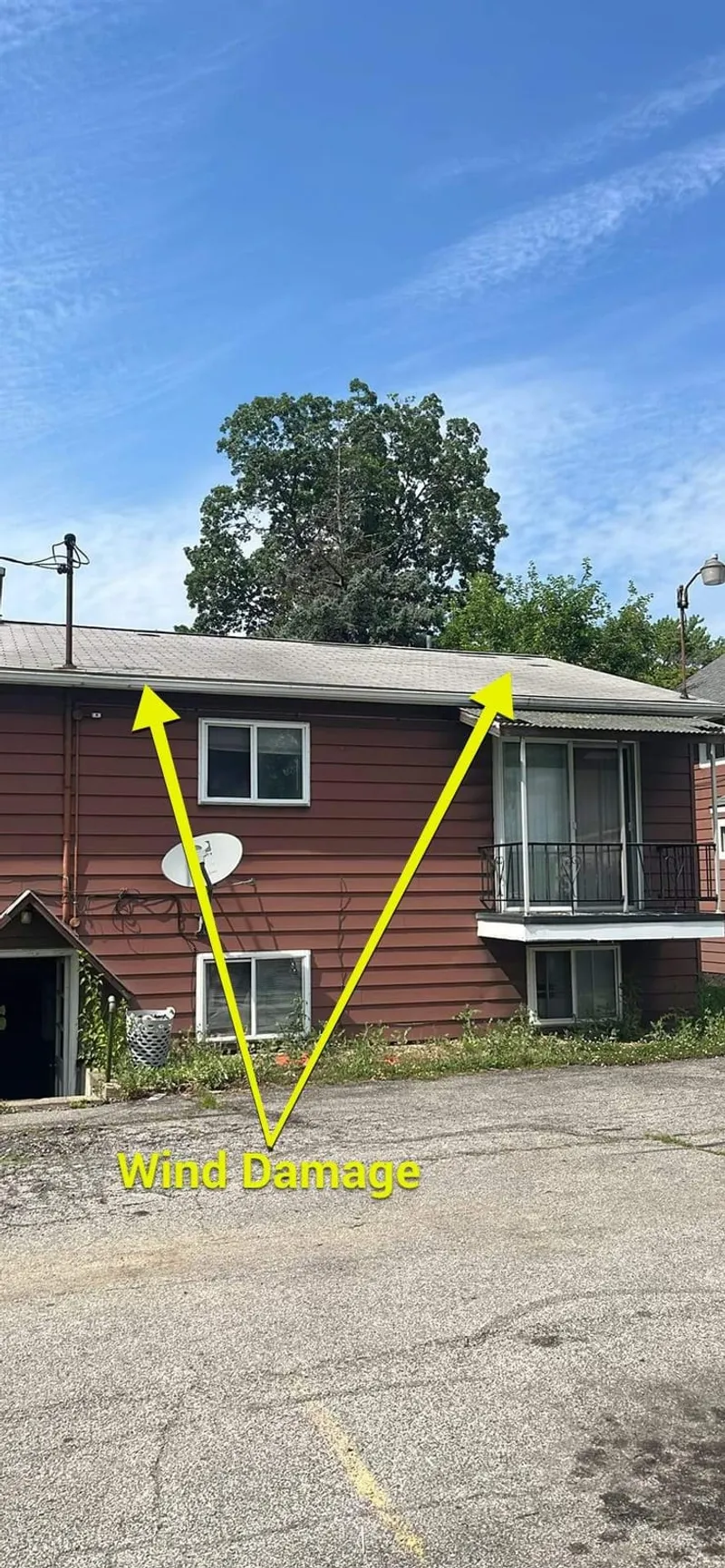
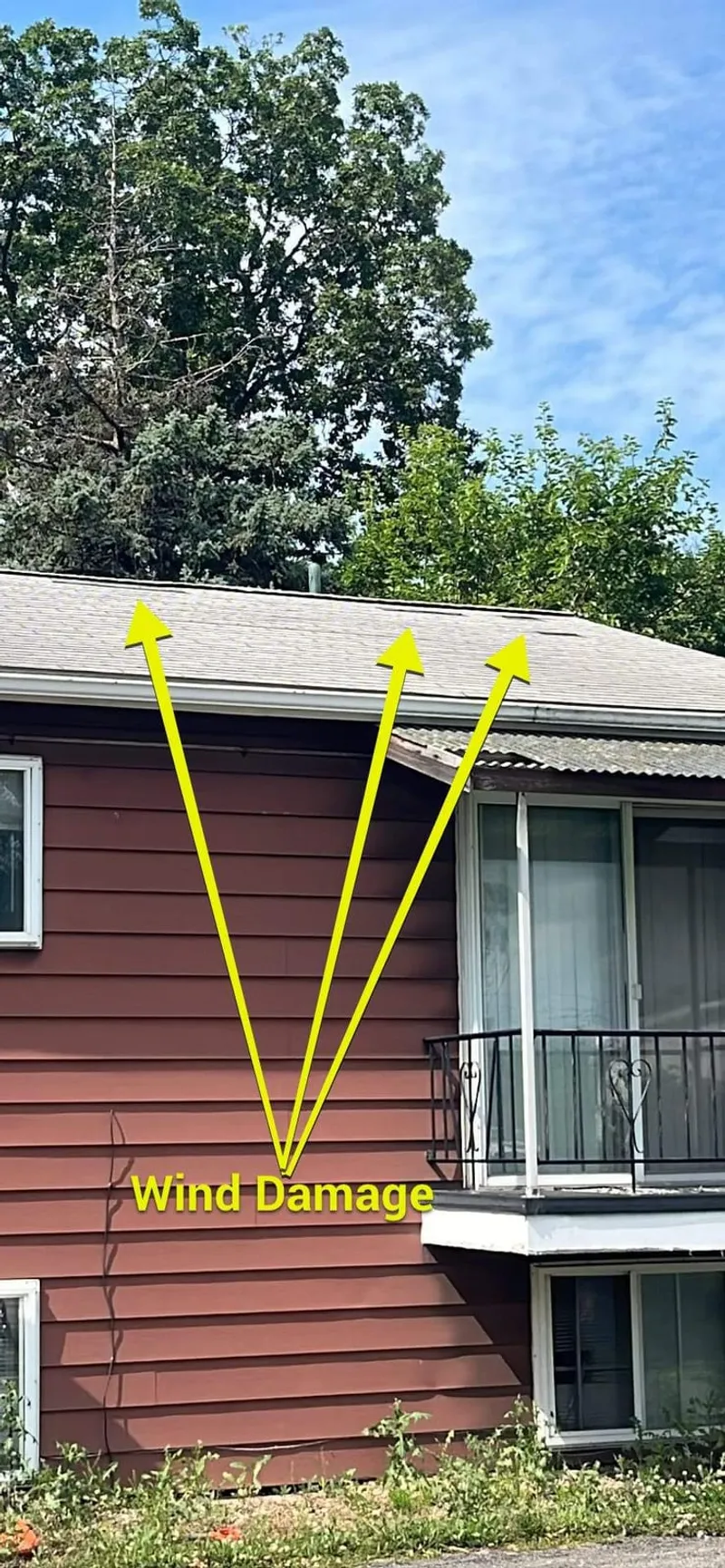
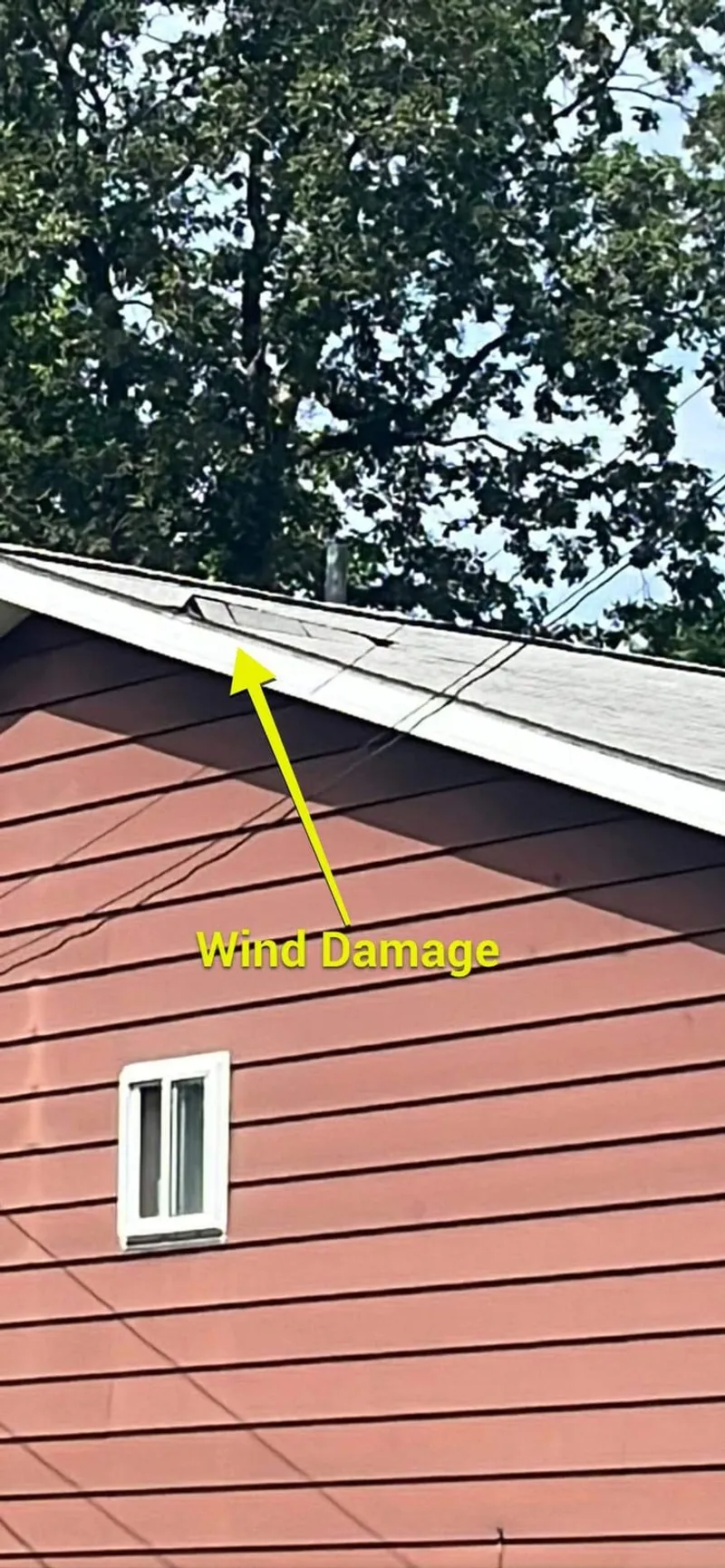
We document the wind path, tie the damage to the dated storm event, and inspect the whole structure — roof, elevations, gutters and interior — for the water intrusion that follows. On larger multi-unit buildings like this one, the damage spans many faces and roof planes, and that full pattern is exactly what proves a storm loss.
As public adjusters we work for you, not the insurer. Our founder began his career as a general contractor, so we read the roof and structure the way a builder does. Ohio's storm season brings real, coverable wind losses statewide every year — and we handle them across Ohio and our other office states.
Documented Claim
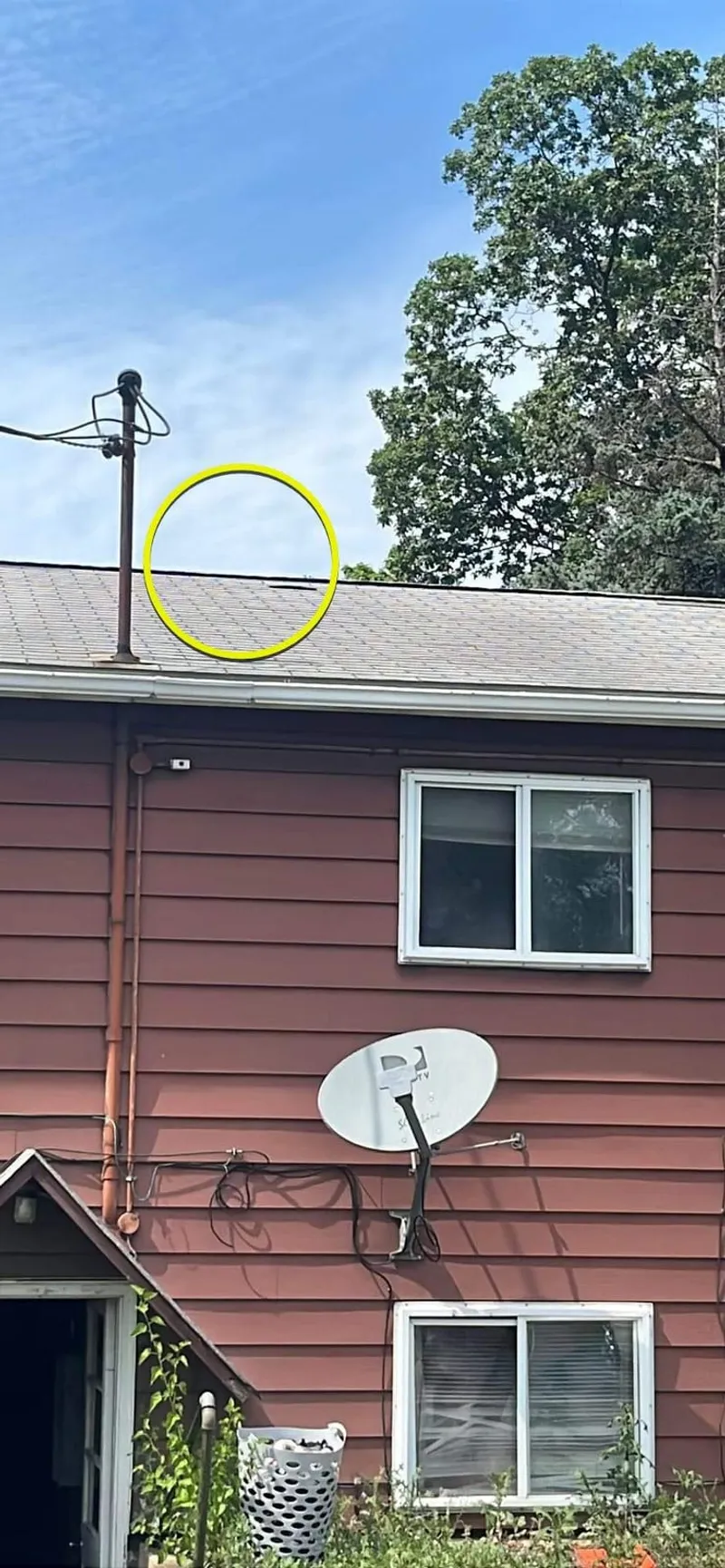
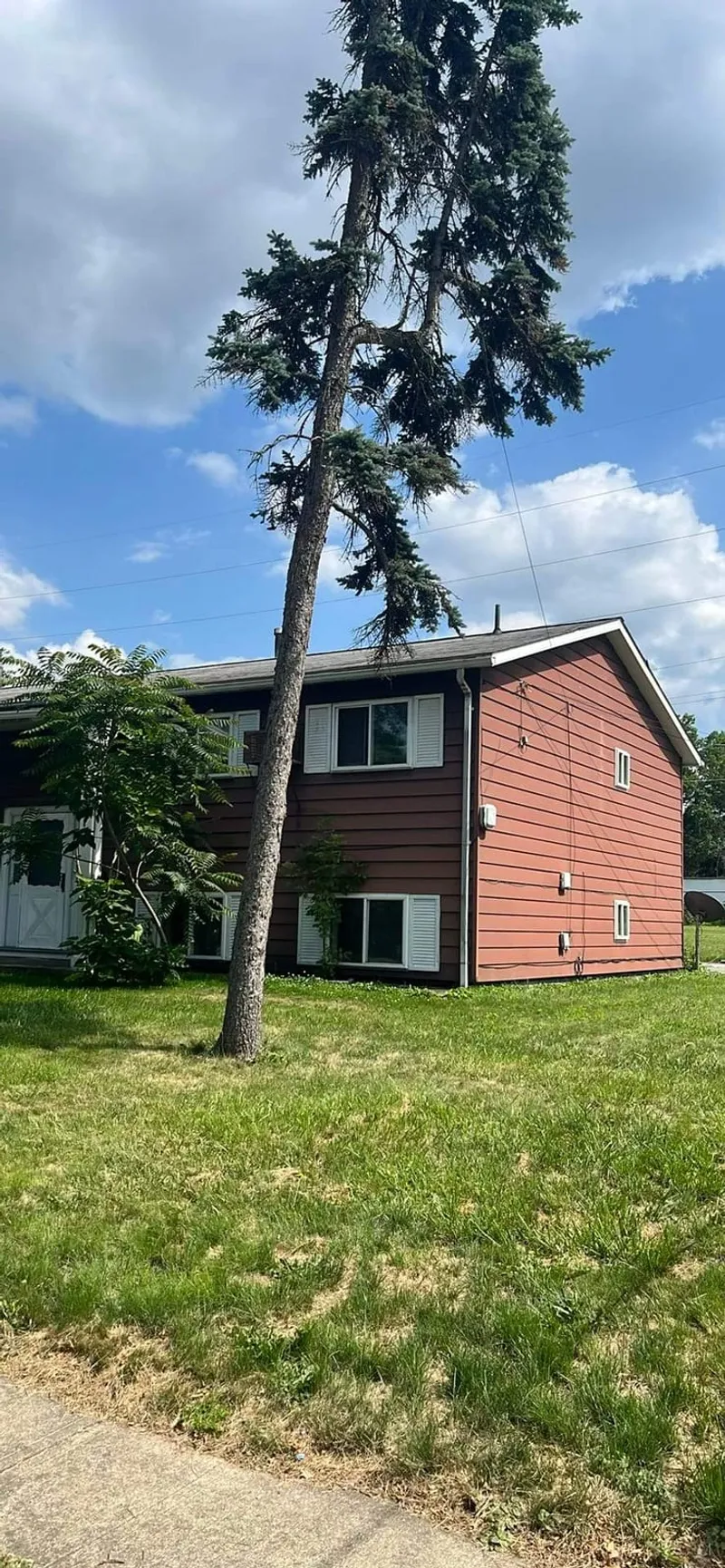
Inside a Wind Loss — Lorain, OH
Photos from one of our Ohio storm claims on a multi-unit building in Lorain (Greater Cleveland). This is the level of documentation we bring to every loss — the evidence that turns a "wear and tear" denial into a fair settlement. (Client details withheld for privacy.)
Documented Claim
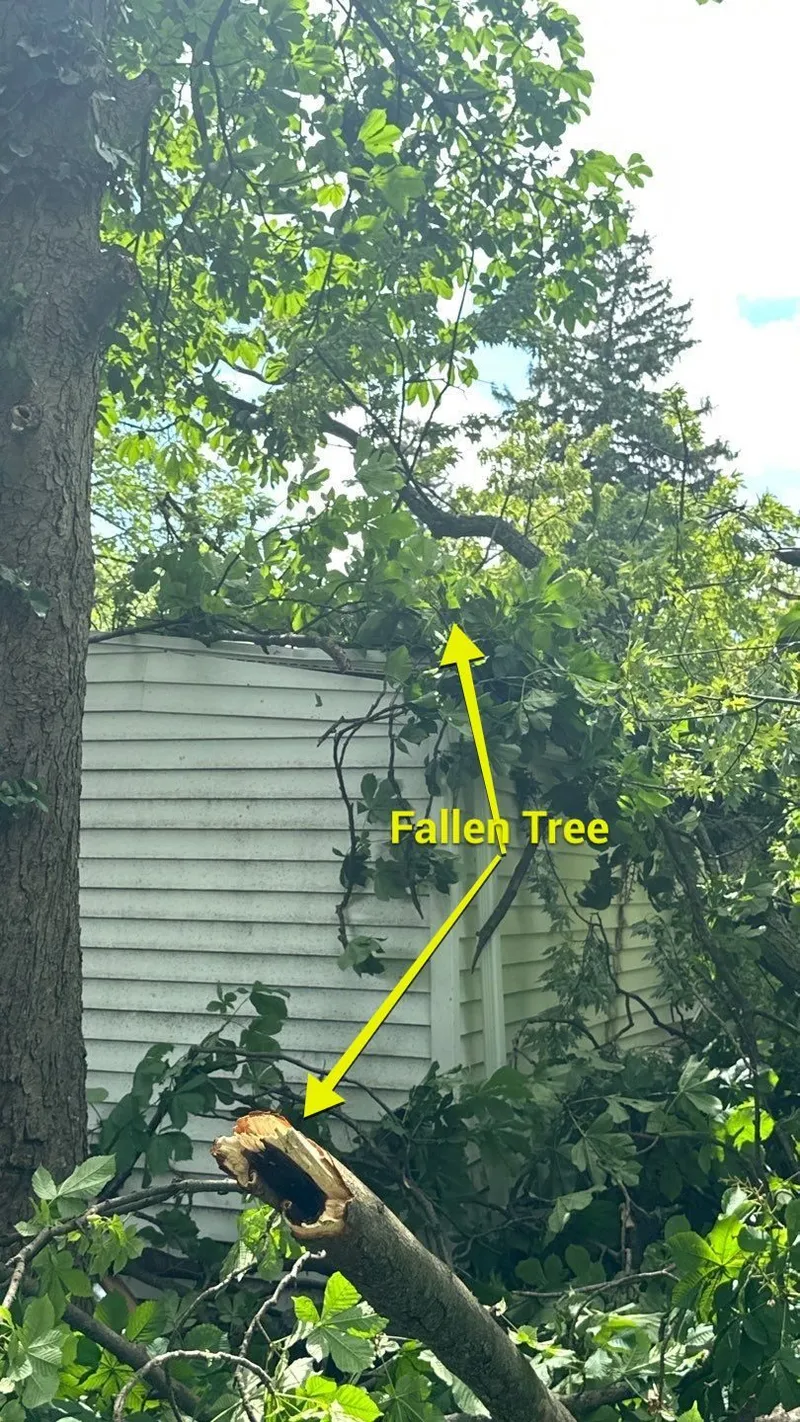
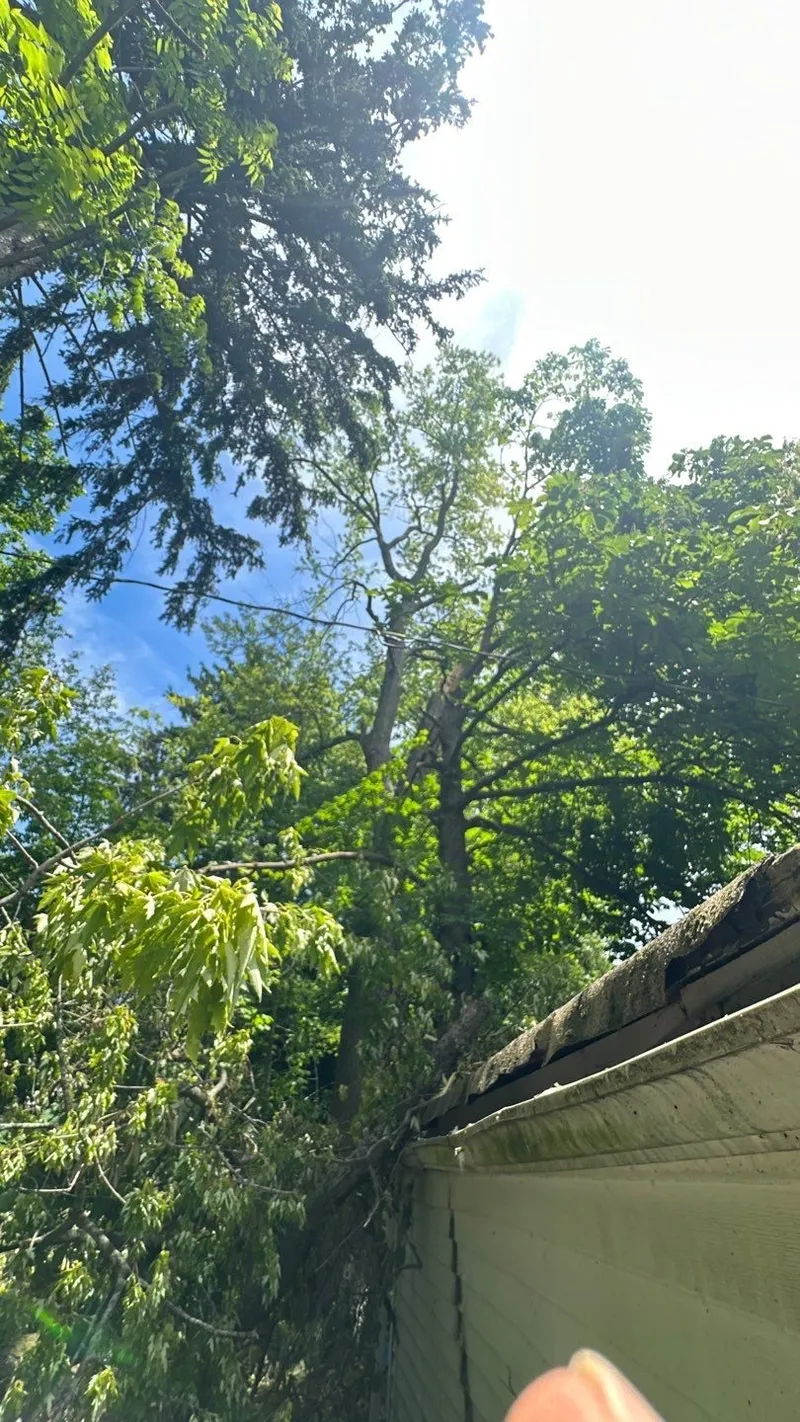
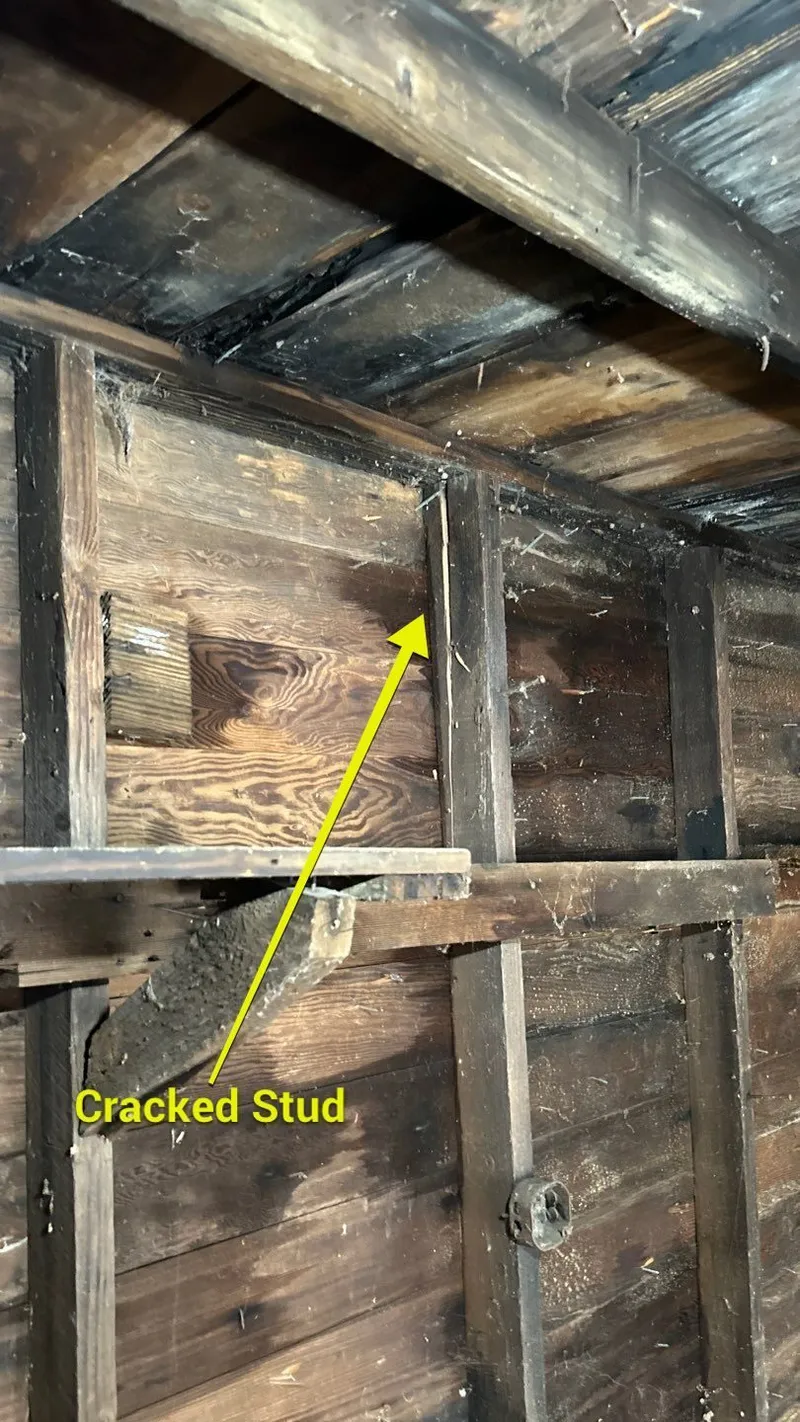
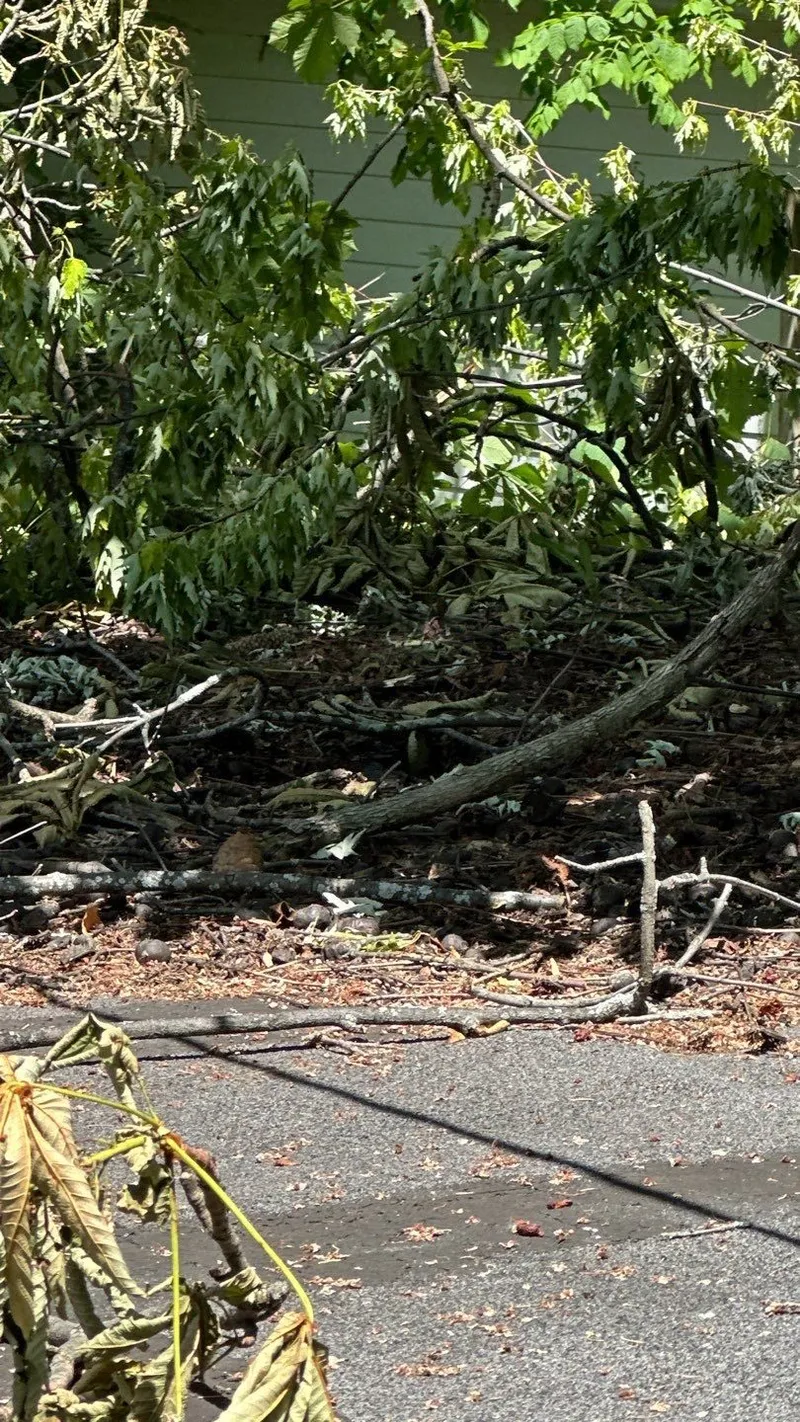
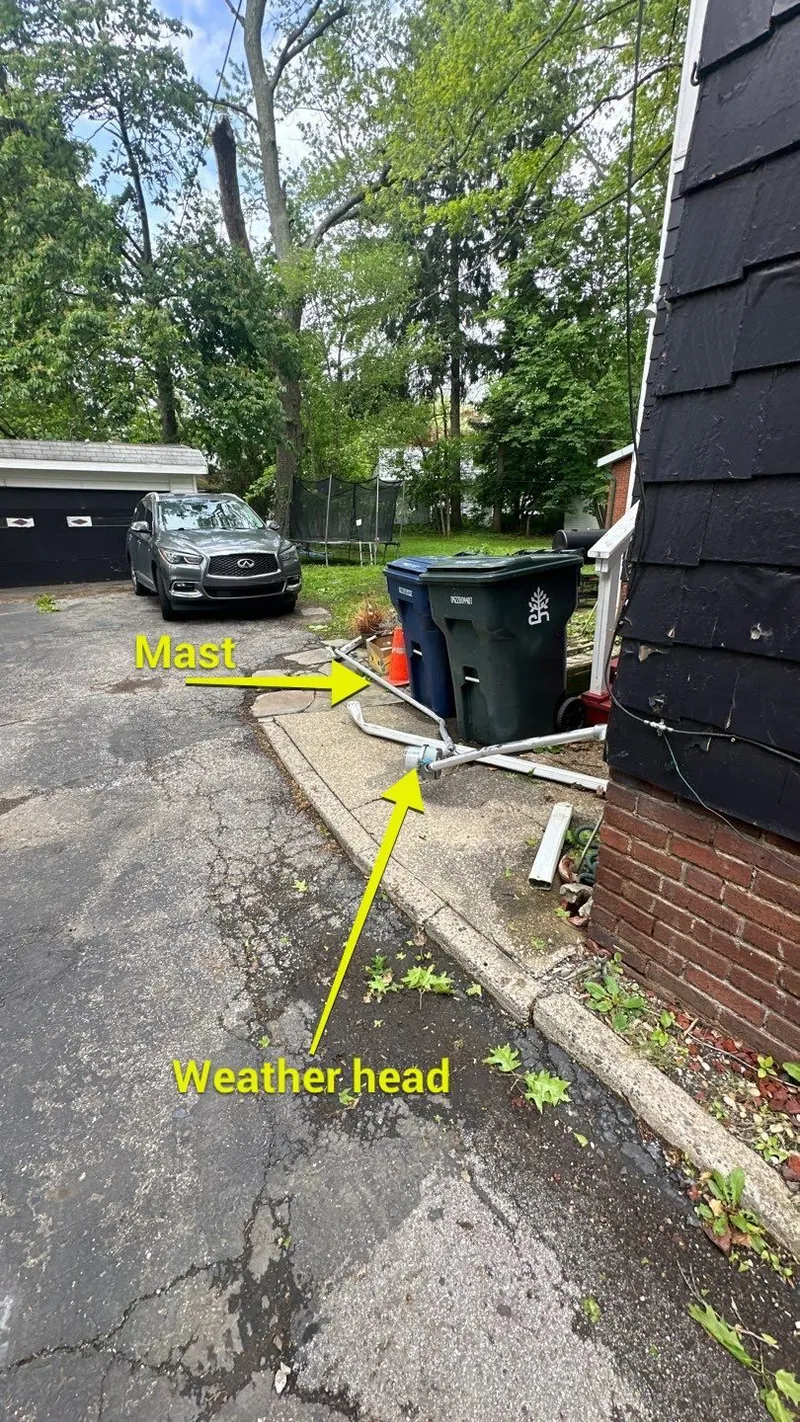
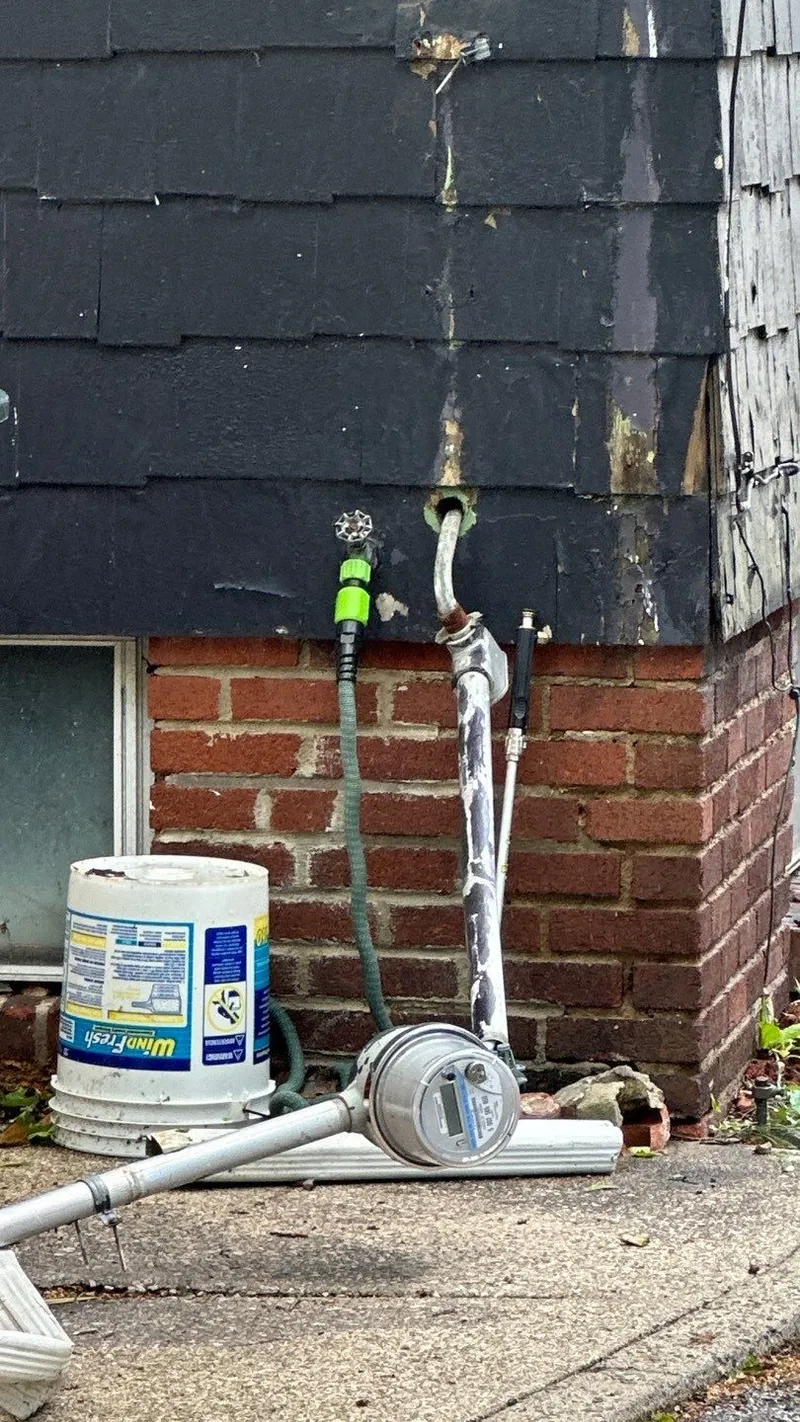
Inside a Wind Loss — Cleveland Heights, OH
A single-family home in Cleveland Heights after a windstorm. A tree came down on the detached garage — cracking the framing — while the same storm tore the electrical service mast off the house and pulled the service line to the ground. This is exactly the kind of tree-and-wind loss carriers try to trim to a fraction of its real scope. We document the whole event, from the garage structure to the roof to the electrical service. (Client details withheld for privacy.)
What Wind Claims Often Leave Out
- Lifted or creased shingles dismissed as "old" instead of storm-damaged
- Loosened flashing, ridge caps and roof-mounted fixtures
- Torn, cracked or blown-off siding across whole elevations
- Driven-rain intrusion that surfaces as interior stains later
- Detached gutters and downspouts
- Fallen-tree and limb impact — and the roof/siding damage it causes
- Matching across the many roof planes of a large multi-unit building
Other Damage We Handle
Related Services
Storm Damage to Your Property?
We'll document it and deal with the insurance company for you. Our fees are contingency-based and subject to applicable state law and the terms of your written agreement.